CyberDefenders Blog
Dive into the world of cybersecurity with CyberDefenders Blogs. Explore informative articles, insights, and expert perspectives on the latest trends, best practices, and cutting-edge technologies in the field. Stay updated, enhance your knowledge, and empower yourself to defend against cyber threats.
Enterprise Cyber Range: How Security Teams Train Against Real-World Attacks
An enterprise cyber range is an isolated environment where an organization's security team investigates simulated attacks built from the evidence, tools, and ambiguity of real incidents. It dif...
Measuring Cyber Range ROI: How to Prove Training Impact
Cyber range ROI is measured by comparing what a team can do before and after a training period, using scenario scores on realistic incidents rather than completion counts. The metrics that hold up ...
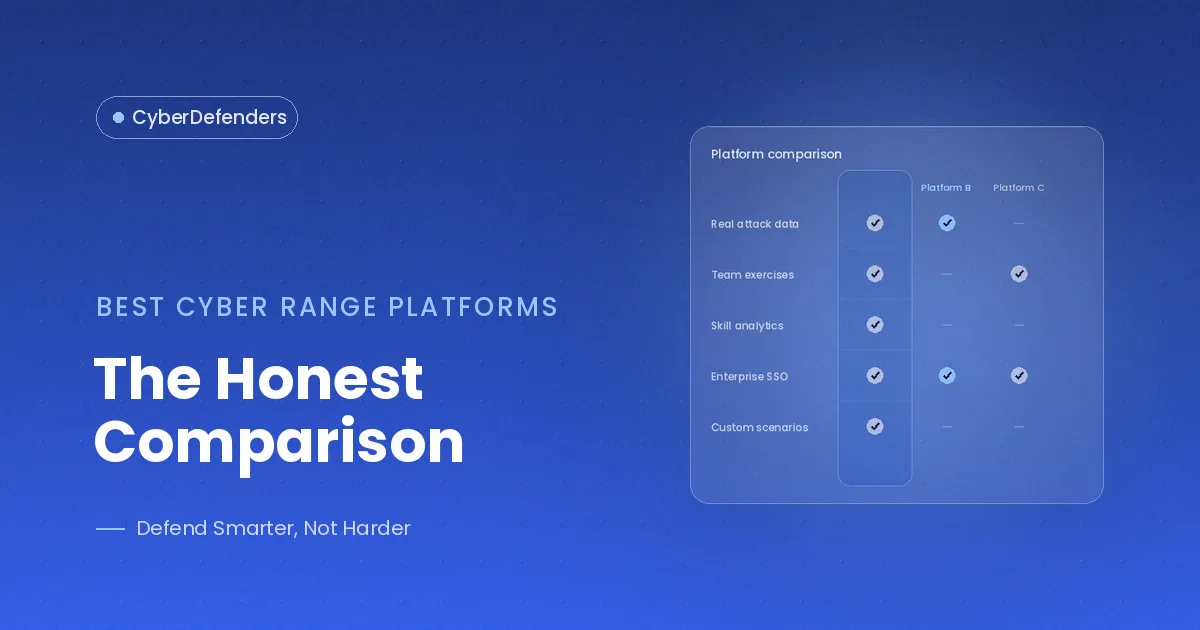
Best Cyber Range Platforms
The best cyber range platform depends on who is training and what they need to be able to do afterward. For SOC analysts and DFIR practitioners who need realistic investigations, CyberDefenders is ...
How to Choose a Cyber Range for Your Security Team
To choose a cyber range, define what your team must be able to do first, then judge vendors on six things: realism of evidence, hands-on execution with real tools, team capability, threat relevance...
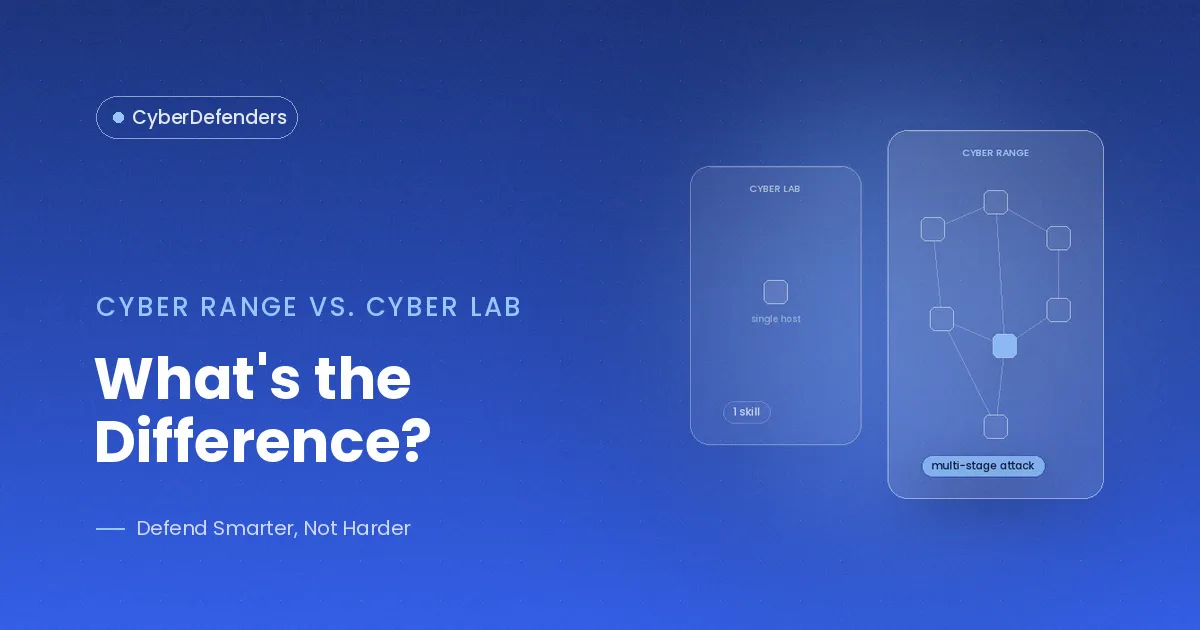
Cyber Range vs. Cyber Lab: What's the Difference?
A cyber lab is an isolated environment for practicing a specific tool or technique, with no adversary and no unfolding incident. A cyber range is a full simulated environment where an attack has ha...
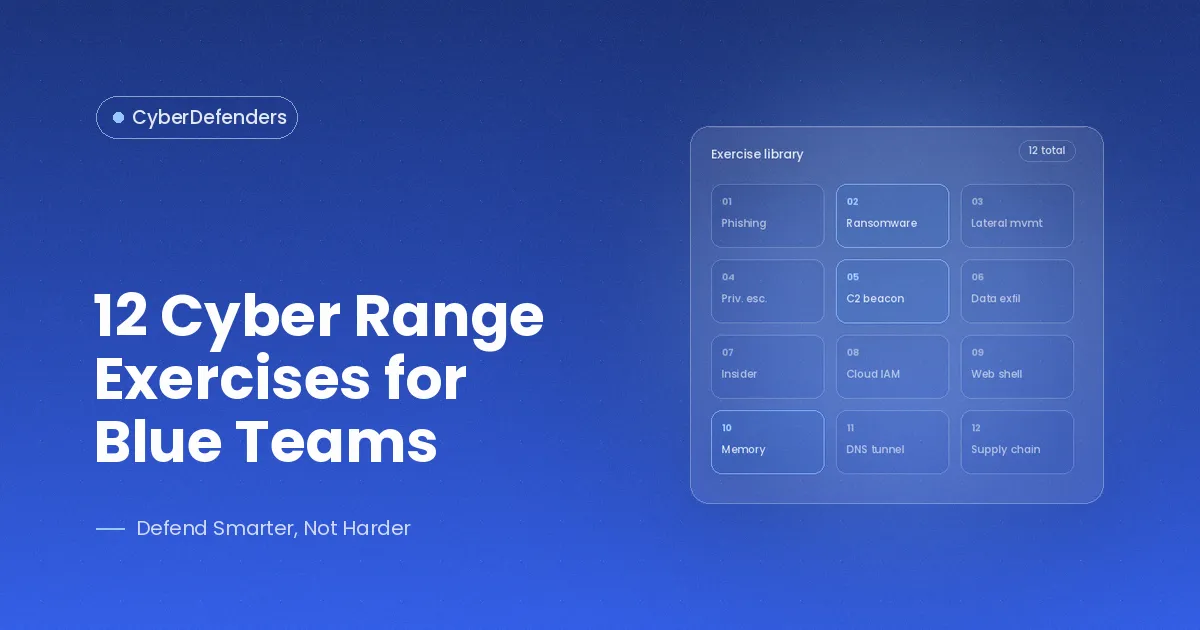
12 Cyber Range Exercises for Blue Teams
The best cyber range exercises for blue teams are built around incident types defenders should be able to investigate: phishing, malware, ransomware, credential compromise, Active Directory attacks...
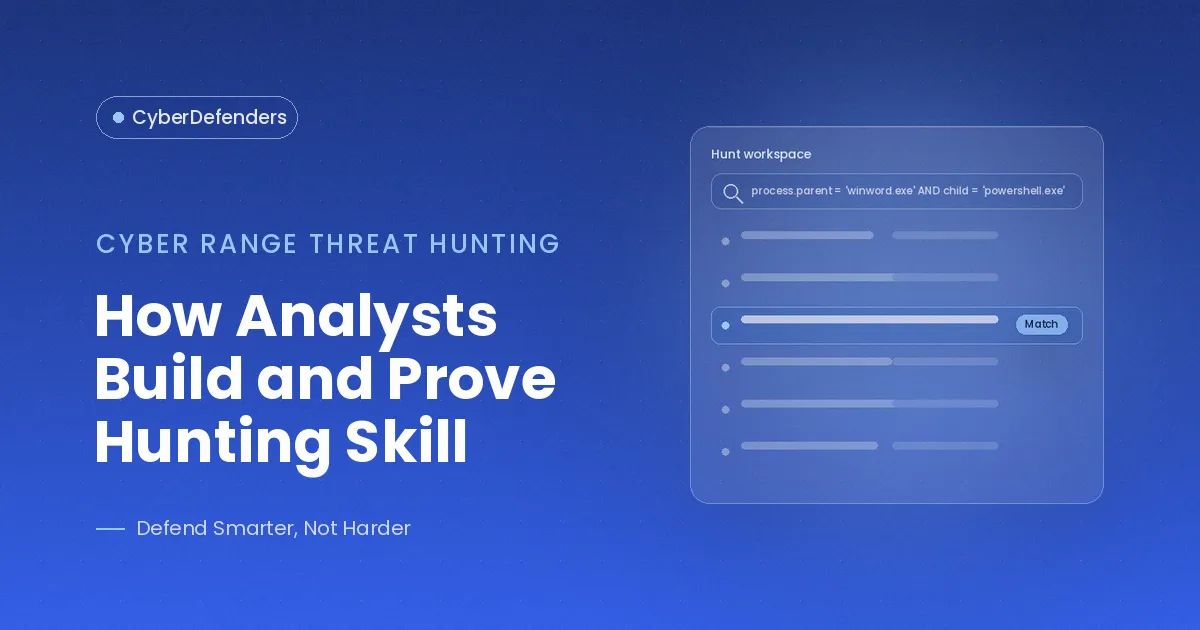
Cyber Range Threat Hunting: How Analysts Build and Prove Hunting Skill
Cyber range threat hunting training puts an analyst into a realistic environment where an intrusion is present but no alert has fired, and asks them to find it from a hypothesis. Because the range ...
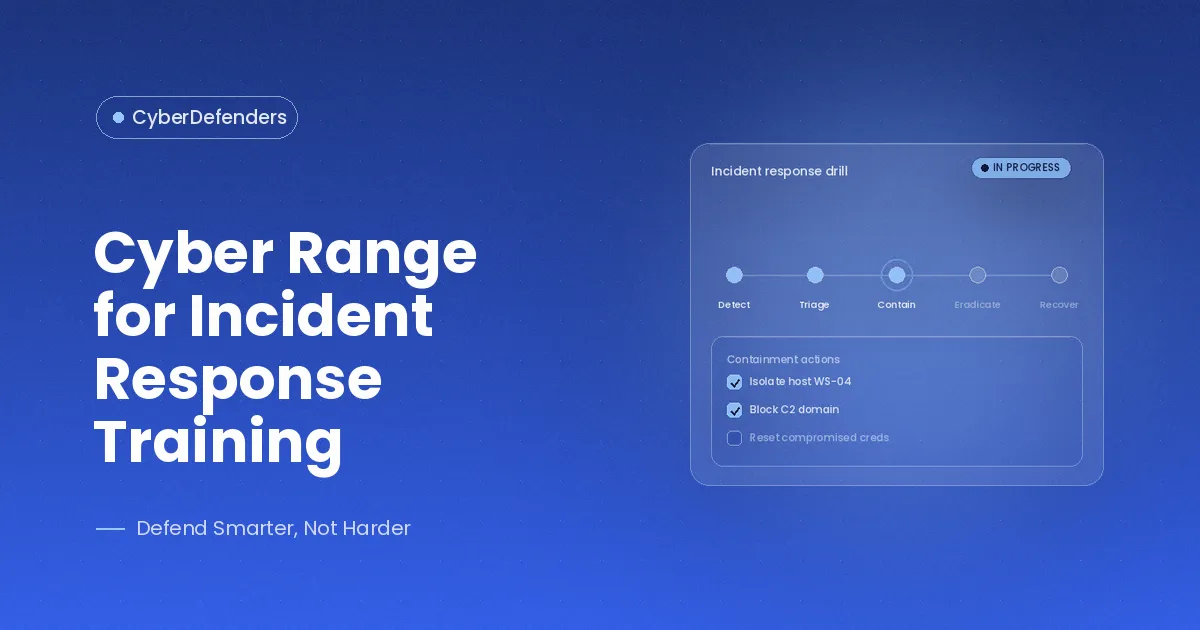
Cyber Range for Incident Response Training
Cyber range incident response training gives responders realistic intrusions to investigate, with real evidence and a known answer, so the team can practice the decisions the incident response life...
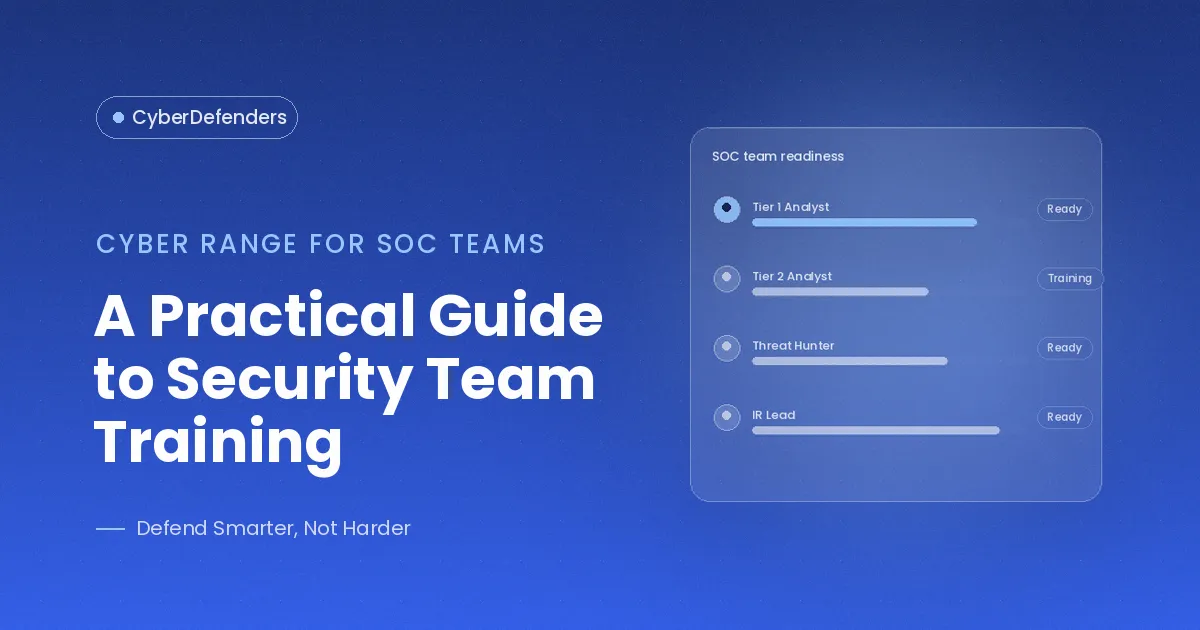
Cyber Range for SOC Teams: A Practical Guide to Security Team Training
A cyber range for SOC teams is a browser-based place where analysts practice the work of the queue on real evidence: triaging alerts, investigating in a SIEM, and working endpoint and network artif...
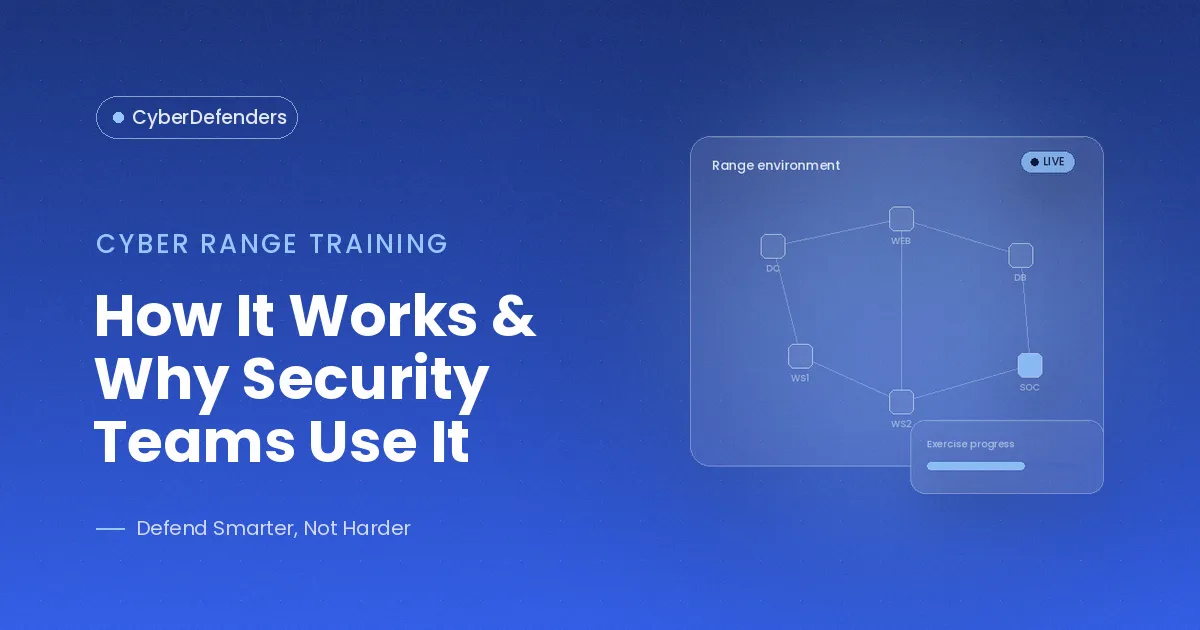
Cyber Range Training: How It Works & Why Security Teams Use It
Cyber range training puts an analyst inside a simulated but realistic attack and asks them to investigate it with real tools. A session runs in four parts: a scenario built from real artifacts, an ...
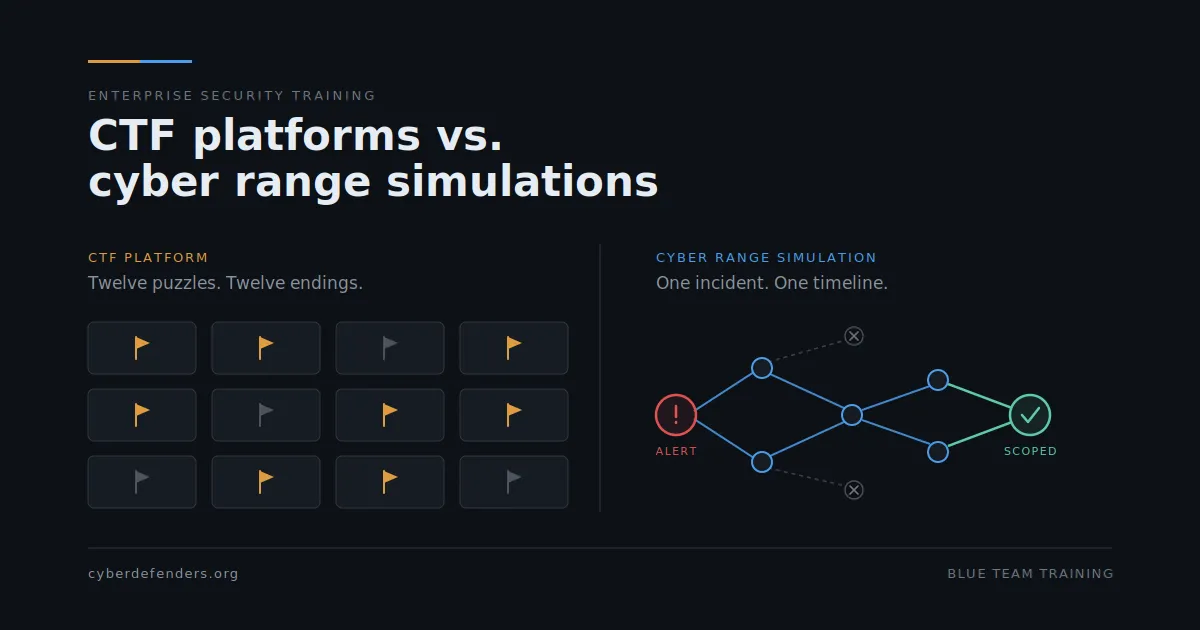
CTF vs. Cyber Range: What Each Format Actually Trains
A CTF scores players on self-contained puzzles with a known answer. A cyber range puts analysts inside a full simulated incident with realistic evidence and no guaranteed outcome. The cyber range v...
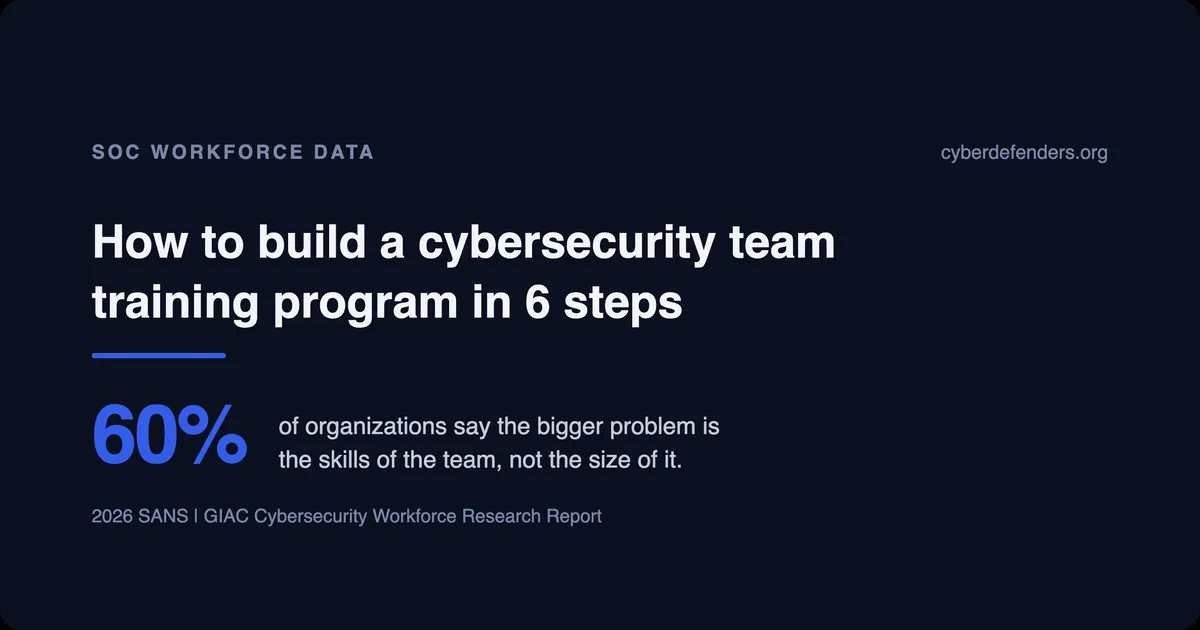
How to Build a Cybersecurity Training Program for Your Whole Team (Not Just Individuals)
Most security training budgets are spent one person at a time: a course for the new hire, a certification for whoever asks, a conference pass for the analyst who is due one. Each of those can be mo...
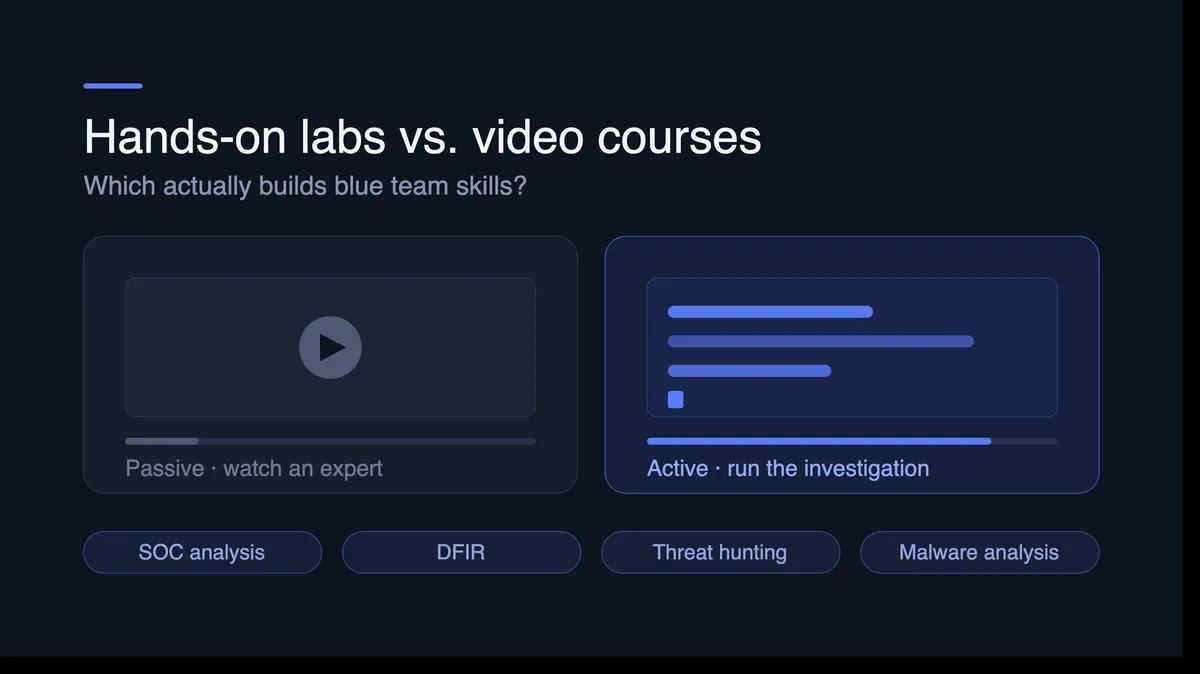
Hands-On Labs vs. Video Courses: Which Actually Builds SOC Skills?
An analyst on your team finishes a 40-hour video course on incident response. They pass every quiz, and the completion certificate lands in your inbox. Two weeks later a real alert fires, a PowerSh...
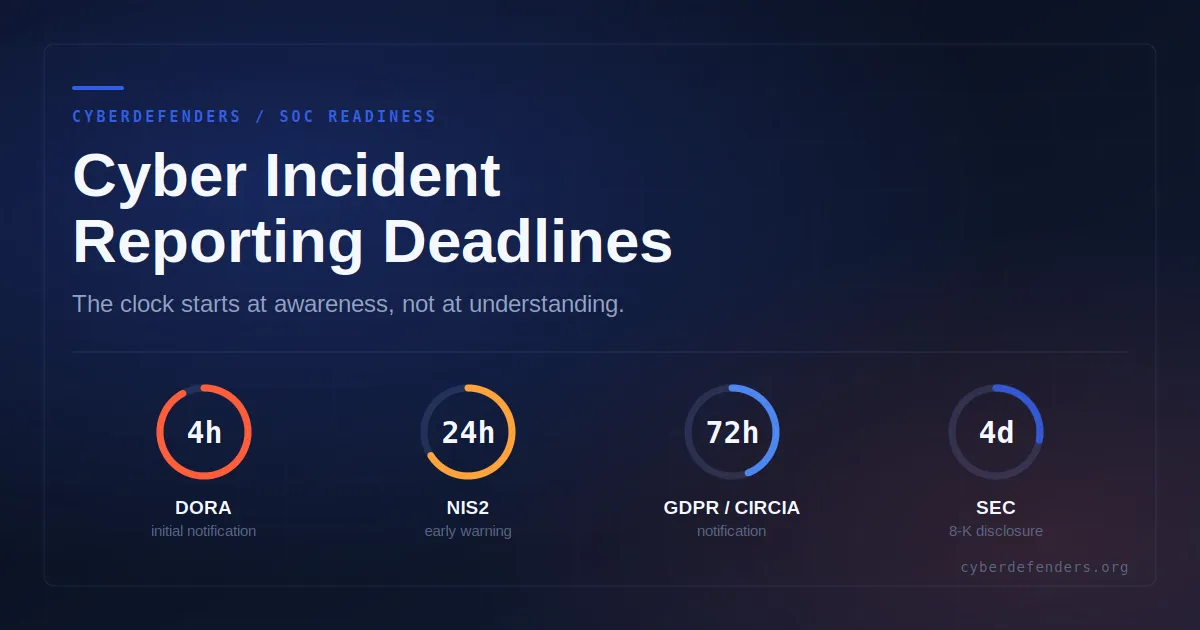
Cyber Incident Reporting Deadlines: What Your SOC Must Do (2026)
Cyber incident reporting deadlines are shorter than most security teams assume, and they start earlier. Four business days. That is how long a US public company has to disclose a material cyber inc...
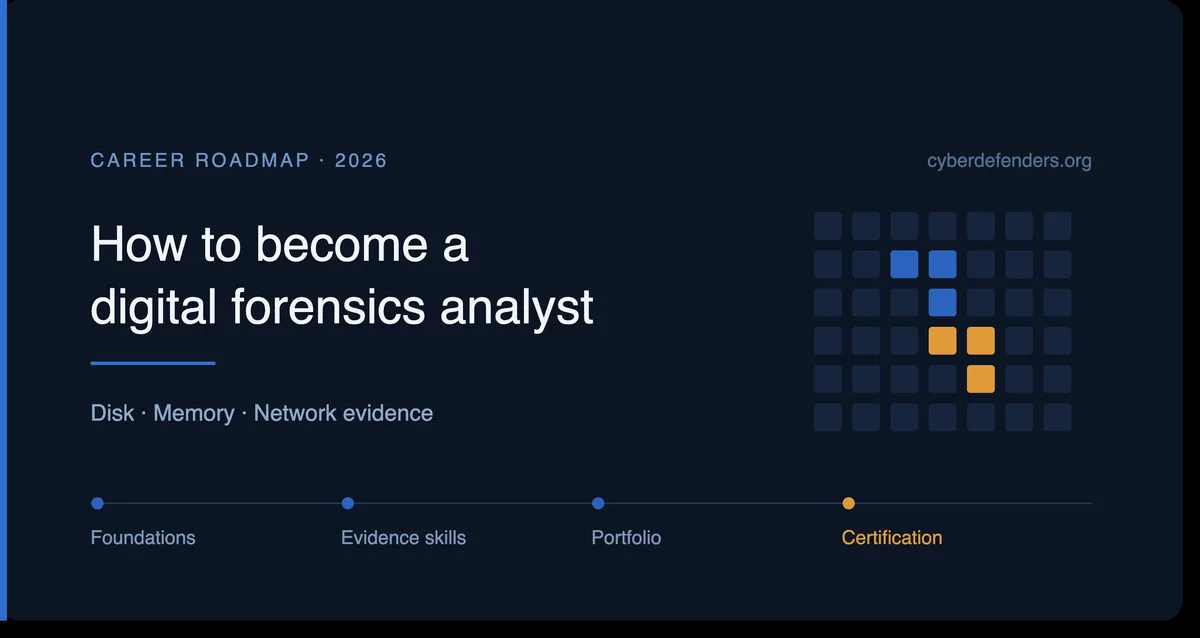
How to Become a Digital Forensics Analyst: A 2026 Career Roadmap
You do not need a computer science degree, a law enforcement badge, or a decade in IT to become a digital forensics analyst. You need four things: solid operating system and networking fundamentals...