CallMeOnTheChain - EtherRAT Detailed Walkthrough
Introduction
This walkthrough guides you through the forensic analysis of a sophisticated attack featuring EtherRAT, a Remote Access Trojan that leverages blockchain technology for Command and Control (C2) infrastructure. The investigation begins with the compromise of an AWS EC2 instance through CVE-2025-55182, a critical Remote Code Execution vulnerability in Next.js applications.
What makes EtherRAT particularly interesting is its use of Ethereum smart contracts to dynamically resolve C2 server addresses—a technique that makes traditional takedown efforts exceptionally difficult. Throughout this analysis, we'll trace the complete attack lifecycle using the provided PCAP file with TLS session keys for decryption.
Setting Up Your Environment
Before beginning, configure Wireshark for TLS decryption:
- Open Wireshark and go to Edit → Preferences → Protocols → TLS
- Set (Pre)-Master-Secret log filename to the path of
sslkeys.log - Click OK and open
maromalix_capture.pcap
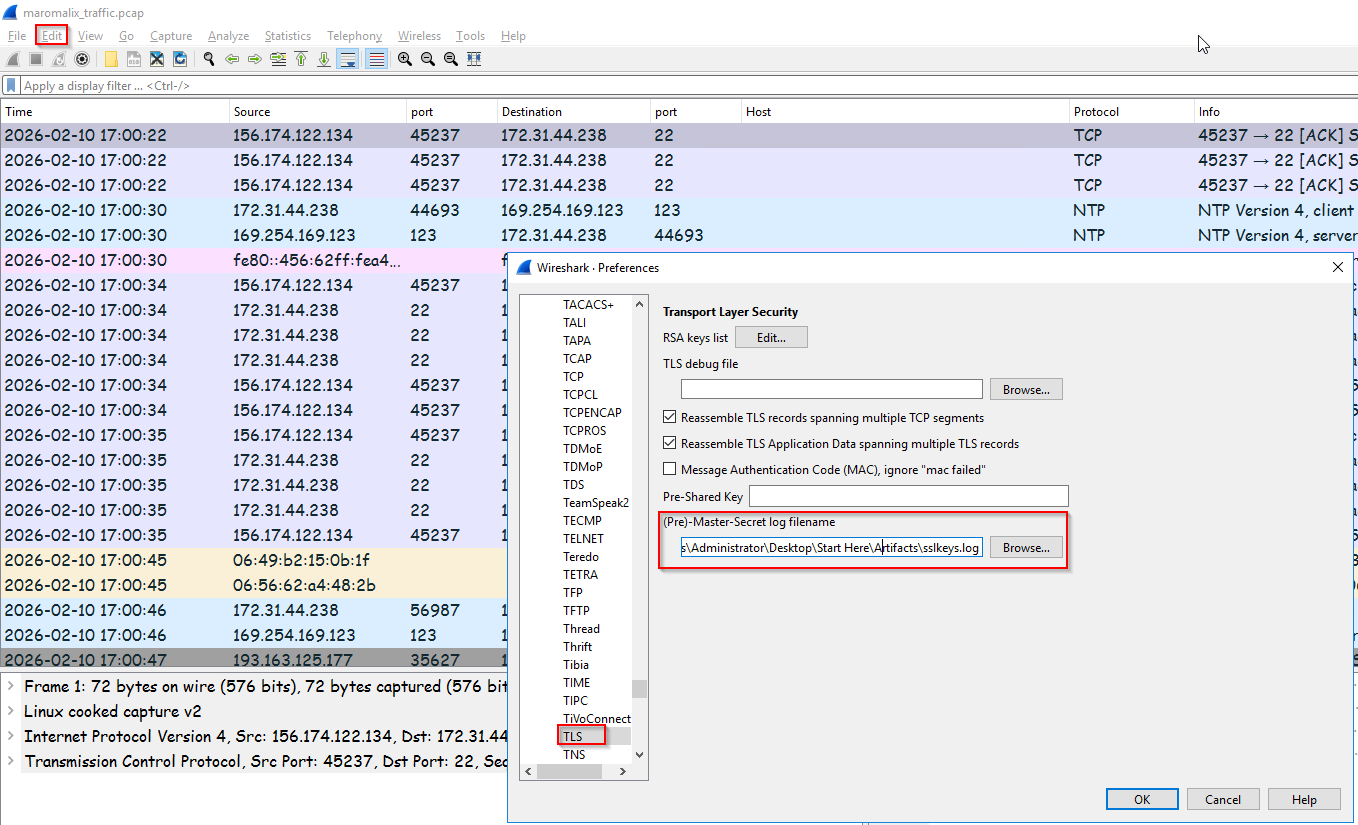
With TLS decryption configured, HTTPS traffic will now appear as decrypted HTTP in Wireshark, allowing us to inspect request and response bodies.
Also we will be using cmder (which is pinned to taskbar) along with tshark so make sure you are in the correct directory
cd "/c/Users/Administrator/Desktop/Start Here/Artifacts"
Phase 1: Initial Access
Q1: What is the IP address of the attacker that exploited the web application?
We begin our investigation by hunting for anomalies in the HTTP traffic. Since we don't have immediate indicators of what to look for, we'll start by identifying unusual patterns. A good starting point is examining User-Agent strings, as automated attack tools often have distinctive signatures.
In Wireshark, we could manually browse through HTTP requests, but with thousands of packets, this would be time-consuming. Instead, we'll use tshark in Cmder to aggregate User-Agent strings a…
Unlock Your Full Learning Experience with BlueYard Labs
Sign up to track your progress, unlock exclusive labs, and showcaseyour achievements—begin your journey now! Join for Free